
Feeding Kids Without Losing Your Mind: 5 Neurodiverse-Friendly Tips

Updated: Apr 1
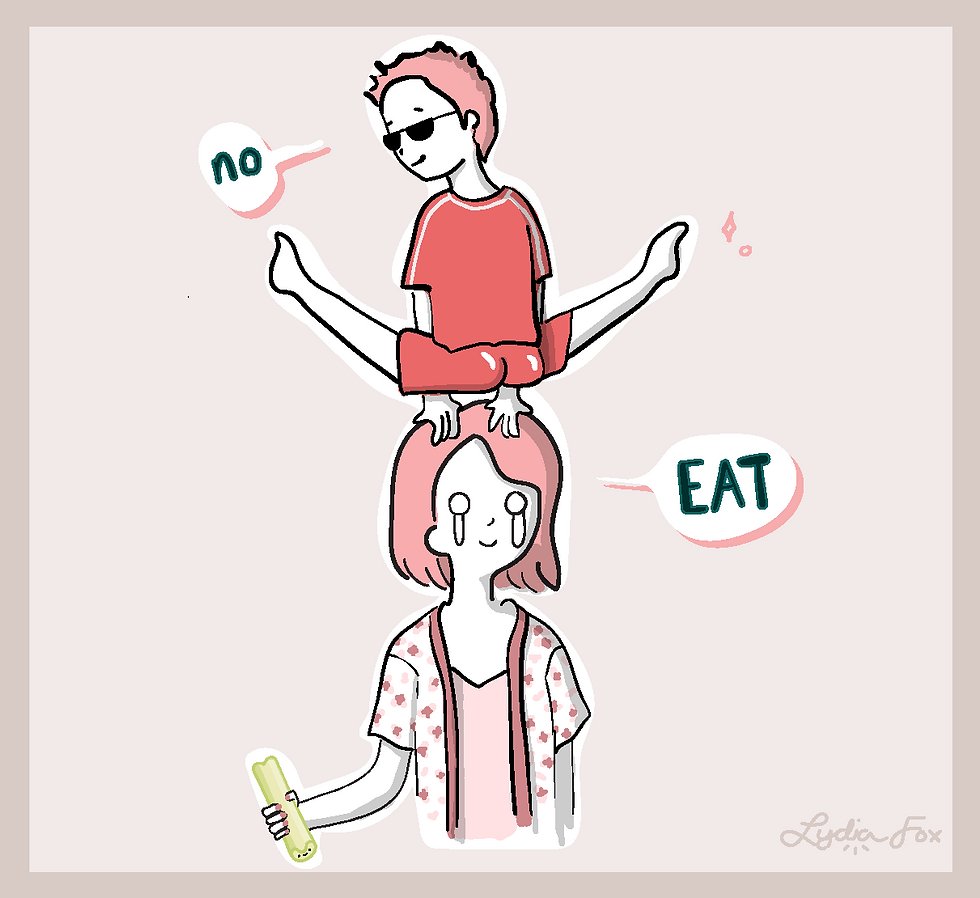
Feeding kids can bring most parents to the edge of insanity and often feels like a constant battle.

It’s not that we are lacking competence, instead it’s because we care so darn much.
Whether it's grating veggies until they are almost atomic, using reward systems and encouraging stickers, exaggerating benefits claiming it'll make them superhuman, listing all the vitamins ....we do them all because we care. These attempts - useless they may be - are proof you are doing a good job of loving your children and at the end of the day that's what matters most.
The truth about feeding
Our problem isn’t a lack of effort, it's that our efforts are mostly wasted and we are suffering from guilt.
Before you lose any more hair, I just want to share some things about the way we approach eating in the first place:
It's not as big of a deal as it's made out to be. Take a look around a playground and count how many kids are lying listless on the ground because they never ate an asparagus? Almost none.)
It’s not our job to MAKE our kids eat vegetables. We can't force them to do anything. Control is an illusion.
Even if you do all the right things, at the right times in the right ways, it still doesn’t guarantee a certain result. Children are just small people inside chaotic bodies.
Worrying and feeling anxious about getting 5 serves of fruit and vegies into your kid each day is always going to waste your precious and limited energy reserves.
Instead, I want to encourage you:
It’s ok! Good enough is great.
What malnutrition really looks like:
• Growth is faltering
• Persistent physical signs: weakness, constipation, very dark rings under the eyes, fatigue, irritability
If you have concerns, consider visiting a paediatric dietitian. They will be able to assess growth and explore strategies to help. Click here to learn more about Paediatric Dietitians and how sessions are funded
Top tips to save your sanity
There are lots of tips and I have tried almost all of them. With one super picky auDHDer and one ADHDer, I have had my fair share of feeding challenges. Also, a background in nutrition only doubled the mom-guilt for me.
After trying all the advice here are the five tips that I found helped the most:
1) Repetition: don’t give up on foods, instead plate it up weekly. Smaller is good, one or two peas, or a stick of carrot.
The reason is that before children decide to eat something, they need to feel familiar with it. Play with it. Squish it. Smell it. It can take up to 30 tries before a child will consider liking something.
2) Remove emotion: High emotions get in the way. Frustration, anger and punishment lead to anxiety for the whole family.
Surprisingly, too much excitement can also work against you. It could trigger PDA (Pathological Demand Avoidance) or create a sense of pressure.
3) Lead by example: Our habits eventually become “normal” for our children. Their brains are designed to copy us.
Familiarity = safe = normal = adopted behaviour.
4) Review who's responsible for what. Our job is not to make children eat. Our job is to put variety on their plate: that means both preferred and non-preferred foods.
Our child’s job is to then choose what they eat. They don’t get to decide what goes on the plate!
5) "No bad foods” This may sound over-the-top but the idea is shame-free eating.
To remove the demoralization around food, we need to change how we talk about it.
"Don't leave anything on your plate" becomes "Stop when your body feels full"
“I don’t like pizza” becomes “Pizza isn’t my preference”
“This will make me fat” becomes “my body will feel better if I don’t eat it”
FREEBIE
Download “Eat the Rainbow” featuring shame free messaging and cute as hell illustrations of fruits, vegies and treats.
Other rules in my house
Because both my kids are prone to getting rigid with what they eat, I've experimented a LOT with strategies. In my experience, these helped keep us balanced the most without becoming overwhelming:
1. Try one bite of everything on the plate
2. Sugar is not available if you refuse dinner
3. Make an effort - even if it’s small
Note: Although these worked for me, they may not work for you. Each child is so different. and need different strategies. Find your balance: Try a bunch of different stuff. See what works. Remove what doesn’t.
Important lesson I recently learned
It's important to share our failings. Here's a small story about one of my recent parenting fails that will encourage you to feel a little less alone...
Izzy is 5. She has always enjoyed eating slowly, taking small bites and talking more than eating. Mealtime takes around 45 mins.
When she started school, this became a problem. She didn’t have the luxury of 45 mins to eat anymore, more like 15. All her friends would finish eating then go off to play so rather than eat, she'd prioritise play too.
It meant Izzy did not eat much at school and her lunch box would come back almost uneaten.
After a few months I started a reward chart to encourage her to eat. Every time she showed she had made an effort, she got to tick off her chart. At the end of the chart, she’d get a prize.
It didn't work. She began to reject more foods from her lunch box. Yoghurt, then cheese, dried fruits, hot cross buns and sandwiches. Anything that wasn't lollies or chips.
After one year I toughed up: introduced a consequence: she’d eat what she could when she got home then do 10 mins of writing practice. Her lines were: “Food is yummy. My lunch is good for me”
Things got worse. A few months ago and I snapped. Enough was enough! I raised the car roof, then I raised the roof at home, then I sent her to her room.
I stormed off to my own room to contemplate what just happened and what my next steps were. As I thought it became clear that this was all just absurd. The stress, the effort, the exhaustion...how little it all mattered in the long run!
My apology was offered shortly after along with an explanation: I'd become aware I had gone over the top and my cause wasn't justified but it was mainly because I had felt like I’d failed her. My decision was that for the next 6 months I will not talk about, look at, care about or discuss what comes back in her lunch box.
After school that week I continued my promise: kept my mouth shut and my face happy no matter what.
To my surprise...she actually began eating. Bites were being taken from her fruit and vegies. Two weeks later, she began eating all her fruit. Today, almost she will even eat most of her sandwhich and some yoghurt.
I was stunned but somehow have managed to hide it behind an ambivalent, composed face because I've finally understood that emotion creates anxiety for Izzy.
I learned:
• What matters for Izzy is independence, autonomy and zero pressure
• It was up to me to figure out what works for her brain / unique wiring
• I let my own fears and insecurities about food get in the way
Conclusion
Your fussy eater will get there eventually too! Though it may take a while, the important thing to focus on is staying connected with our kids, keep letting them know we are on the same team and whatever we do, don't let feeding anxiety get in the way of enjoying meals together. It's just not that important.

Comments